
When You Do the Crime You Must Do the Time
Post 5224
Read the full article at https://lnkd.in/ghNVD-f9, see the video at https://lnkd.in/gPCxMn5T and at https://lnkd.in/ga6ZVGDz, and at https://zalma.com/blog plus more than 5200 posts.
When a Person is Convicted of a Crime The Hardship Inflicted on His Family is the Result of His Actions Alone
In United States v. Tarek Abou-Khatwa, CRIMINAL No. 18-cr-67 (TSC), United States District Court, District of Columbia (October 24, 2025) after Defendant Tarek Abou-Khatwa was convicted in November 2019 on 22 counts related to a sophisticated health insurance fraud scheme as head of an insurance-brokerage firm, initially Tarek was sentenced to 70 months in prison.
Home Confinement:
After less than 16 months in prison, Tarek was placed on home confinement under the CARES Act. He was later remanded to prison for violating the conditions of his home confinement order.
Motion for Sentence Reduction:
Tarek filed for sentence reduction under 18 U.S.C. § 3582(c)(2) based on Amendment 821 to the Sentencing Guidelines, which provides a two-point offense-level reduction for certain zero-point offenders.
Legal Analysis – Eligibility for Sentence Reduction
Both parties agreed Abou-Khatwa was eligible for a reduction under Amendment 821, which applies retroactively and would lower his guideline range from 70–87 months to 57–71 months. The court is required to consider the nature and (1) the nature and circumstances of the offense, (2) the history and characteristics of the defendant; (3) the need for the sentence imposed; (4) the kinds of sentences available; (5) the sentencing range established; (6) any Sentencing Commission policy statements; (7) the need to avoid sentencing disparities among defendants; and (8) the need to provide restitution. [18 U.S.C. § 3553(a).] The court noted that the 8 factors counsel strongly against a sentence reduction.
The court found the crimes were serious, motivated by greed, and involved a calculated scheme resulting in large losses to both a major insurer and small business clients. Defendant’s conduct during home confinement — his failure to disclose financial information, persistent complaints about restrictions, and lack of full accountability — counted against any reduction in his sentence.
The court acknowledged Abou-Khatwa’s low risk of recidivism and hardships faced by his family. The court also noted that these factors were already considered at sentencing and did not outweigh the seriousness of the offense. However, the court concluded that Abou-Khatwa’s crimes were serious and motivated by greed.
Despite making “a handsome living” and “enjoy[ing] a life of great privilege,” Defendant engaged in a years-long, calculated scheme to line his pockets with millions of fraudulently obtained dollars.
CONCLUSION
Although eligible for a sentence reduction, the court found it unwarranted given the facts and law. The court ordered the original sentence to stand.
It is important to note that hardships for defendants and their families are common in criminal cases. The existence of hardships on Tarek and his family they were not particularly compelling in Tarek’s case because the hardships do not outweigh the seriousness of the Defendant’s crimes and his inappropriate conduct while on home confinement.
ZALMA OPINION
The USDC for the District of Columbia recognized the seriousness of health insurance fraud that made Abou-Khatwa tons of money hurting individuals and insurers for his handsome living that allowed him to enjoy a life of great privilege. He was caught, tried and convicted and showed contempt for the system by abusing home confinement. He will, therefore, serve his entire sentence in prison and is responsible for the hardships incurred by his family not the prosecutors or the court.
(c) 2025 Barry Zalma & ClaimSchool, Inc.
Please tell your friends and colleagues about this blog and the videos and let them subscribe to the blog and the videos.
Subscribe to my substack at https://barryzalma.substack.com/subscribe
Go to X @bzalma; Go to Barry Zalma videos at Rumble.com at https://rumble.com/account/content?type=all; Go to Barry Zalma on YouTube- https://www.youtube.com/channel/UCysiZklEtxZsSF9DfC0Expg; Go to the InsuranceClaims Library – https://lnkd.in/gwEYk.
Insurance Expert May Not Testify to Speculative and Contains Unsupported Conclusions.
Posted on September 18, 2026 by Barry Zalma
See the full video at and at https://rumble.com/v7fmifw-expert-may-only-testify-to-what-experience-supports.html
In Michele A. Over, and The Estate Of Paul R. Over v. State Farm Mutual Automobile Insurance Company, and State Farm Fire And Casualty Company, Civil Action No. 23-cv-02243-PAB-STV, United States District Court, D. Colorado (September 14, 2026) Michele and Paul Over sued State Farm Fire and State Farm Auto over hail-damage and stolen-vehicle claims.
The operative dispute concerned State Farm Auto’s motion to exclude or limit opinions from plaintiffs’ insurance-industry expert, Aaron Castillo. Castillo.
Law
The proponent of expert testimony must establish by a preponderance of the evidence that an expert is qualified and that the opinions are helpful, sufficiently grounded, and reliably derived and applied. Experience-based opinions must explain how the...
150 Months in Prison for Tax Fraud
Post 4846
Posted on September 17, 2026 by Barry Zalma
See the full video at https://lnkd.in/g8rh3JBX and https://lnkd.in/gmkdy-9C, In United States Of America v. Thomas Addaquay, Nos. 25-10609, 25-10611, United States Court of Appeals, Eleventh Circuit (September 9, 2026) the Eleventh Circuit affirmed all challenged convictions, the 150-month aggregate sentence, and the challenged $4,123,474.55 restitution award.
FACTS
In United States Of America v. Thomas Addaquay, United States Of America v. Thomas Addaquay, Nos. 25-10609, 25-10611, United States Court of Appeals, Eleventh Circuit (September 9, 2026) the Eleventh Circuit affirmed all challenged convictions, the 150-month aggregate sentence, and the challenged $4,123,474.55 restitution award.
FACTS
Thomas Addaquay controlled United Consolidated Accounting and Business Services (UC), nominally a check-cashing business.
The government proved a three-stage tax-refund scheme that converted the resulting refund checks into usable funds through ...
Major Fraud Perpetrator Asserts Fifth Amendment Privilege to Avoid Prosecution
Post 5489
Posted on September 14, 2026 by Barry Zalma
Fraudster Refuses to Answer Questions About His Alleged Fraud
See the full video at https://lnkd.in/gvicAMDr and at https://lnkd.in/gvicAMDr
In Great American Insurance Co. v. Gemstone Property Management, LLC, et al., No. 23-cv-9100 (LJL), United States District Court, S.D. New York (September 8, 2026) Great American Insurance Company alleged that it was defrauded through a scheme in which Subin Associates, LLP recruited individuals to stage construction-site injuries, arranged unnecessary medical treatment and litigation funding, and pursued fraudulent personal-injury claims.
Luis Manuel Garcia Salcedo, resulted in a $6 million settlement. Non-party Jose Hernandez allegedly worked as an assistant manager at Subin, operated Hernandez Associates, and owned litigation-funding companies that shared office space with Subin and provided services to its clients.
After Great American ...
Sovereign Immunity Defeats Suit Against Police Officers
Post 4866
Posted on October 21, 2026 by Barry Zalma
In Chad Lightfoot, et al. v. Progressive Direct Insurance Company, et al., Civil Action No. 26-434, United States District Court, E.D. Louisiana (October 9, 2026) Chad Lightfoot was involved in an Orleans Parish automobile accident in 2011 and filed claims with several insurers, including Progressive.
After a related civil dispute, Progressive counsel allegedly submitted a false affidavit stating that Lightfoot had fraudulently received a $50,000 payment. A New Orleans police detective relied on the affidavit to obtain an arrest warrant, and Louisiana State Police Lieutenant Alan Arcana allegedly reported that Lightfoot had received the payment. Lightfoot was arrested in 2015 and charged with theft, insurance fraud, and perjury.
Plaintiffs alleged that no record of the payment existed and that the criminal charges were dismissed on October 15, 2024.
Lightfoot and Geralyn Hawkins filed suit in October 2025 and ...
Plaintiff’s Reading of the Policy is Plaintiff’s Reasonable Allegations
Posted on October 19, 2026 by Barry Zalma
Post 4868
CLASS ACTION THAT STATES A SIMPLE CLEAR AND PLAUSIBLE CAUSE OF ACTION SURVIVES
In Sheila Marino v. Farmers New World Life Insurance Company, No. 2:25-cv-02200-JNW, United States District Court, W.D. Washington, Seattle (October 13, 2026) defendant Farmers New World Life Insurance Company’s (“FNWL”) moved to dismiss Plaintiff Sheila Marino’s putative class action involving flexible universal life insurance.
Marino filed a putative class action in King County Superior Court alleging: (1) breach of contract, (2) breach of the implied covenant of good faith and fair dealing, and (3) violation of the Washington Consumer Protection Act (CPA).
She pleaded two theories: an “overcharge” theory and an “underpayment of interest” theory asked the Court to take judicial notice of historical Federal Funds Effective Rates.
THE LAW
Pleading Standard.
To survive a Rule 12(b)(6) motion, a ...
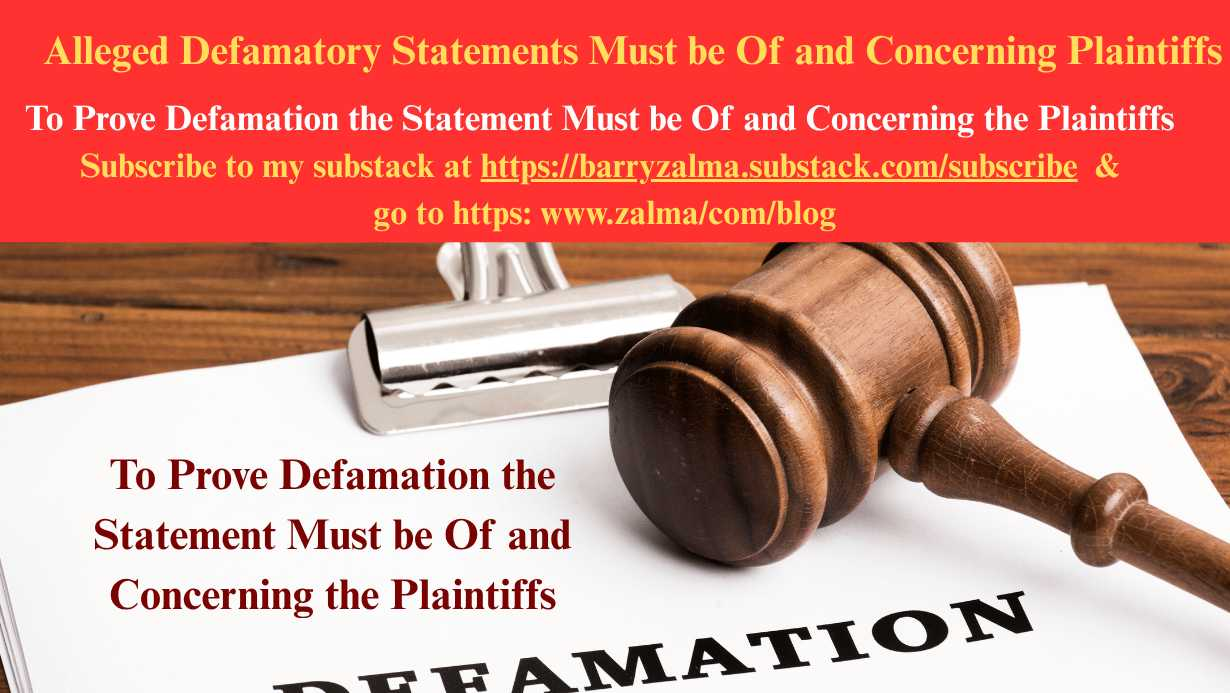
A Suit Filed Before the Claim Exists is Fatal
Post 4870
Posted on October 20, 2026 by Barry Zalma
In Louis Briggs v. Shaun Wimberly; Somerset Services, Inc.; And Wimberly & Associates, PLLC, and Louis Briggs v. Shaun Wimberly And Wimberly & Associates, PLLC Nos. 2024-CA-1471-MR, 2025-CA-1366-MR, Court of Appeals of Kentucky (October 9, 2026) Louis Briggs was arrested in 2014 after an incident with police and charged with several offenses, including third-degree assault.
Probable cause was found and an indictment was returned, but the charges were eventually dismissed. His attorney, Shaun Wimberly, then filed a federal civil rights suit for Briggs in a United States district court, which also asserted state-law claims. The district court dismissed most of the claims and declined to exercise jurisdiction over the remaining state-law claims. Briggs blamed Wimberly for the result, fired him, and appealed to the Sixth Circuit.
While the federal appeal was pending, Briggs filed a legal malpractice action against Wimberly in the Jefferson Circuit Court. The Sixth ...