
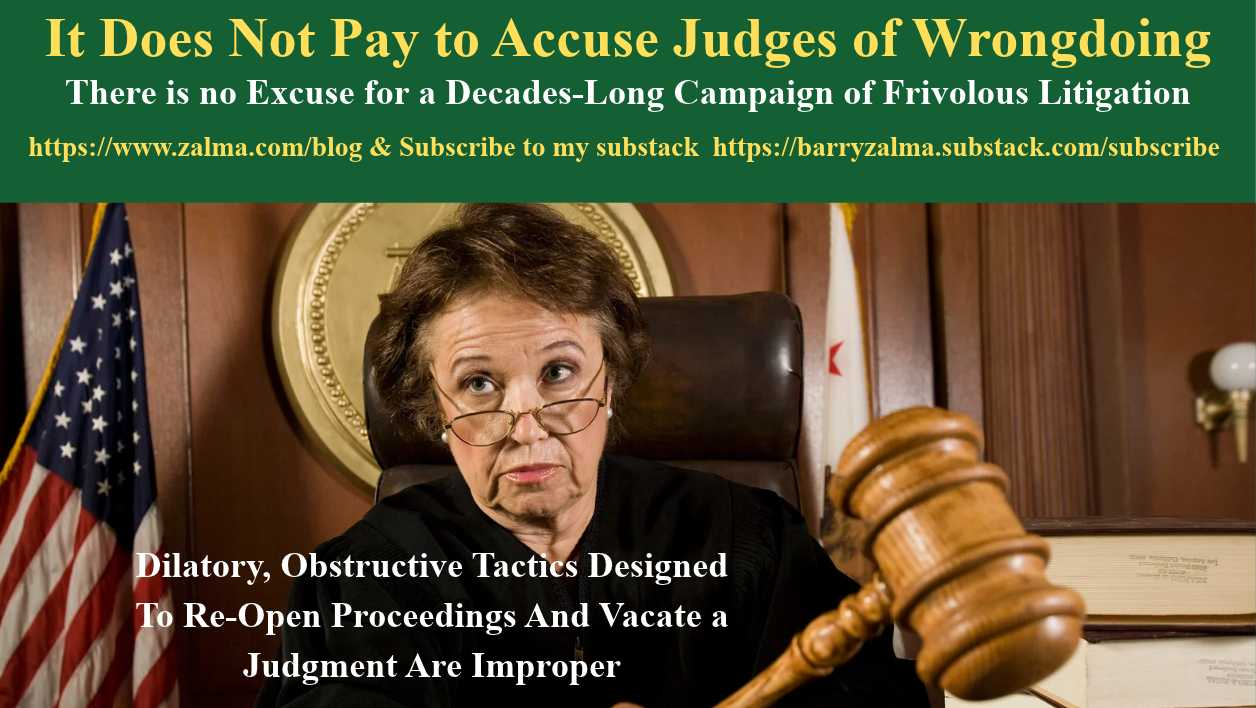
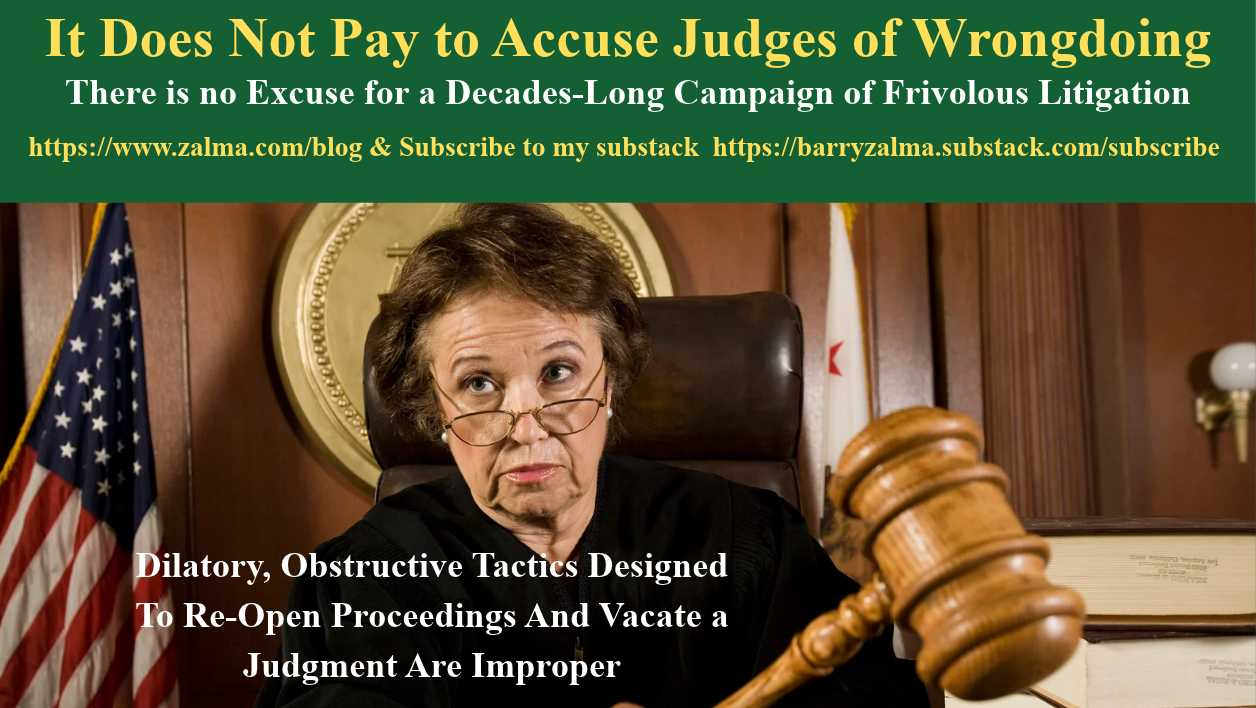
Dilatory, Obstructive Tactics Designed To Re-Open Proceedings And Vacate a Judgment Are Improper
Post 4583
In Three S Delaware, Inc. & Scott R. Steele v. Dataquick Information Systems, Inc. & Maxar Technologies, Inc., Civil Action No. 25-18991 (RK) (TJB), United States District Court, D. New Jersey (November 16, 2026) Three S Delaware (“3SD”) licensed real estate databases from a California company named DataQuick. A newly formed Delaware DataQuick bought the California DataQuick’s assets. The arbitrator later found that the sale included the 1996 license.
Delaware DataQuick sued 3SD in California. 3SD moved to compel arbitration and then counterclaimed. In May 2005, Steele and his counsel walked out of the merits hearing, and the arbitrator proceeded without them. He awarded about $6.17 million to DataQuick.
MARYLAND PROCEEDINGS:
The D. Md. (Judge Motz) confirmed the award, except for attorney’s fees. 3SD obtained a supersedeas bond of about $7.46 million from Federal Insurance Company. The Fourth Circuit affirmed in 2007.
Later Attacks:
3SD filed a Rule 60(d)(3) motion, a suit against Judge Motz, a 2015 California effort, and other filings. All failed.
Plaintiffs’ theory is that the wrong DataQuick sued, so the whole process was a fraud.
New Jersey State Case (2024):
Judge Bartels dismissed with prejudice on Feb. 20, 2026. His grounds were lack of personal jurisdiction, the statute of limitations, collateral estoppel, and unavailability of the Insurance Fraud Prevention Act claims. He found the suit frivolous and awarded fees. Reconsideration was denied.
This Federal Case (Filed Dec. 24, 2025):
There are three counts: fraud on the court, a void judgment and an independent action (Rule 60(d)(1)).
Procedural History:
The Court held several teleconferences. It struck two unauthorized letters from Plaintiffs’ counsel and then took up Defendants’ Rule 12(b)(2) and 12(b)(3) motions.
Plaintiffs, in both California and Maryland, then engaged in a series of years-long dilatory, obstructive tactics designed to re-open proceedings and vacate the judgment. Plaintiffs allege, in short, that Defendants, their previous counsel, an arbitrator, and others orchestrated a decades-long fraud across multiple courts that predated and resulted in the judgment issued by the District of Maryland in 2006.
Plaintiffs’ interminable campaign of vexatiousness apparently knows no bounds, as Plaintiff Steele sued the Maryland federal district judge, accusing him of fraud.
LAW
Rule 12(b)(2):
The plaintiff must prove jurisdiction with affidavits or other competent evidence, not an unverified complaint or “information and belief.”
Issue Preclusion:
A federal court applies the adjudicating state’s law, here New Jersey applies the Calder effects test. An intentional tort, harm felt in the forum, and conduct expressly aimed at the forum.
Bond Cases:
Presenting a claim to a surety does not create jurisdiction in the surety’s state. Dismissal: Jurisdictional dismissals are without prejudice.Leave to amend may be denied if futile.
DISCUSSION AND ANALYSIS
Issue preclusion bars relitigation. Plaintiffs are the same parties, and their jurisdictional theory (the bond) is identical to the one in state court. It was actually litigated. It was an independently sufficient and essential ground for Judge Bartels’ dismissal.
Independently, No Personal Jurisdiction.
1. Plaintiffs do not argue general jurisdiction.
2. They do not meaningfully argue traditional specific jurisdiction.
3. Plaintiffs have no New Jersey ties, so they did not feel the “brunt” of any harm there. The harm was felt where the contract, arbitration, and litigation took place.
Federal Insurance is an Indiana corporation authorized in Maryland, and the bond was notarized in Philadelphia. Two employees with New Jersey addresses do not make it a New Jersey company.
Even if it were based in New Jersey presenting a claim on a bond is not enough. 3SD itself chose the surety.
The bond’s connections are to Pennsylvania, Indiana, Delaware, Maryland, and California, not New Jersey.
Remedy.
The Court is constrained to dismiss without prejudice, but it denies leave to amend as futile.
Closing note.
The Court observed that Judges Motz and Bartels and the Court itself have warned or sanctioned Plaintiffs and counsel for a decades-long campaign of frivolous litigation. No Rule 11 motion has been filed, but the Court noted its own independent authority under Rule 11 and 28 U.S.C. § 1927.
CONCLUSION
Defendants’ motions were GRANTED. The Complaint was DISMISSED WITHOUT PREJUDICE, with no leave to amend. The Court did not reach venue, timeliness, or the merits. An order will accompany the opinion.
ZALMA OPINION
Some litigants refuse to accept the fact that they lost or won a lawsuit. Instead the litigated for ten years in various jurisdictions against various parties including the judges that ruled in favor or against them. The conclusion in New Jersey should stop the litigation with penalties imposed under Rule 11 for frivolous litigation. The litigants should be pleased that they were not punished by the court. a series of years-long dilatory, obstructive tactics designed to re-open proceedings and vacate the judgment. Plaintiffs allegations, in short, claimed that others orchestrated a decades-long fraud across multiple courts that predated and resulted in the judgment issued by the District of Maryland.
(c) 2026, Barry Zalma
Please tell your friends and colleagues about this blog and the videos and let them subscribe to the blog and the videos. Subscribe to my substack at https://barryzalma.substack.com/subscribe, Go to X @bzalma; Go to Barry Zalma videos at Rumble.com at https://rumble.com/account/content?type=all; Go to Barry Zalma on YouTube- https://www.youtube.com/channel/UCysiZklEtxZsSF9DfC0Expg; Go to the Insurance Claims Library – https://lnkd.in/gwEYk.
Insurance Expert May Not Testify to Speculative and Contains Unsupported Conclusions.
Posted on September 18, 2026 by Barry Zalma
See the full video at and at https://rumble.com/v7fmifw-expert-may-only-testify-to-what-experience-supports.html
In Michele A. Over, and The Estate Of Paul R. Over v. State Farm Mutual Automobile Insurance Company, and State Farm Fire And Casualty Company, Civil Action No. 23-cv-02243-PAB-STV, United States District Court, D. Colorado (September 14, 2026) Michele and Paul Over sued State Farm Fire and State Farm Auto over hail-damage and stolen-vehicle claims.
The operative dispute concerned State Farm Auto’s motion to exclude or limit opinions from plaintiffs’ insurance-industry expert, Aaron Castillo. Castillo.
Law
The proponent of expert testimony must establish by a preponderance of the evidence that an expert is qualified and that the opinions are helpful, sufficiently grounded, and reliably derived and applied. Experience-based opinions must explain how the...
150 Months in Prison for Tax Fraud
Post 4846
Posted on September 17, 2026 by Barry Zalma
See the full video at https://lnkd.in/g8rh3JBX and https://lnkd.in/gmkdy-9C, In United States Of America v. Thomas Addaquay, Nos. 25-10609, 25-10611, United States Court of Appeals, Eleventh Circuit (September 9, 2026) the Eleventh Circuit affirmed all challenged convictions, the 150-month aggregate sentence, and the challenged $4,123,474.55 restitution award.
FACTS
In United States Of America v. Thomas Addaquay, United States Of America v. Thomas Addaquay, Nos. 25-10609, 25-10611, United States Court of Appeals, Eleventh Circuit (September 9, 2026) the Eleventh Circuit affirmed all challenged convictions, the 150-month aggregate sentence, and the challenged $4,123,474.55 restitution award.
FACTS
Thomas Addaquay controlled United Consolidated Accounting and Business Services (UC), nominally a check-cashing business.
The government proved a three-stage tax-refund scheme that converted the resulting refund checks into usable funds through ...
Major Fraud Perpetrator Asserts Fifth Amendment Privilege to Avoid Prosecution
Post 5489
Posted on September 14, 2026 by Barry Zalma
Fraudster Refuses to Answer Questions About His Alleged Fraud
See the full video at https://lnkd.in/gvicAMDr and at https://lnkd.in/gvicAMDr
In Great American Insurance Co. v. Gemstone Property Management, LLC, et al., No. 23-cv-9100 (LJL), United States District Court, S.D. New York (September 8, 2026) Great American Insurance Company alleged that it was defrauded through a scheme in which Subin Associates, LLP recruited individuals to stage construction-site injuries, arranged unnecessary medical treatment and litigation funding, and pursued fraudulent personal-injury claims.
Luis Manuel Garcia Salcedo, resulted in a $6 million settlement. Non-party Jose Hernandez allegedly worked as an assistant manager at Subin, operated Hernandez Associates, and owned litigation-funding companies that shared office space with Subin and provided services to its clients.
After Great American ...
There is no Excuse for a Decades-Long Campaign of Frivolous Litigation
Dilatory, Obstructive Tactics Designed To Re-Open Proceedings And Vacate a Judgment Are Improper
Post 4583
Posted on November 19, 2026 by Barry Zalma
In Three S Delaware, Inc. & Scott R. Steele v. Dataquick Information Systems, Inc. & Maxar Technologies, Inc., Civil Action No. 25-18991 (RK) (TJB), United States District Court, D. New Jersey (November 16, 2026) Three S Delaware (“3SD”) licensed real estate databases from a California company named DataQuick.
MARYLAND PROCEEDINGS:
The D. Md. (Judge Motz) confirmed the award, except for attorney’s fees. 3SD obtained a supersedeas bond of about $7.46 million from Federal Insurance Company. The Fourth Circuit affirmed in 2007.
New Jersey State Case (2024):
Judge Bartels dismissed with prejudice on Feb. 20, 2026. He found the suit frivolous and awarded fees.
This Federal Case (Filed Dec. 24, 2025):
There are three counts: fraud on the court, a void judgment and an independent action ...
Insured’s Failure to Report Claim Before Expiration Defeats Claim
Post 4582
Posted on November 18, 2026 by Barry Zalma
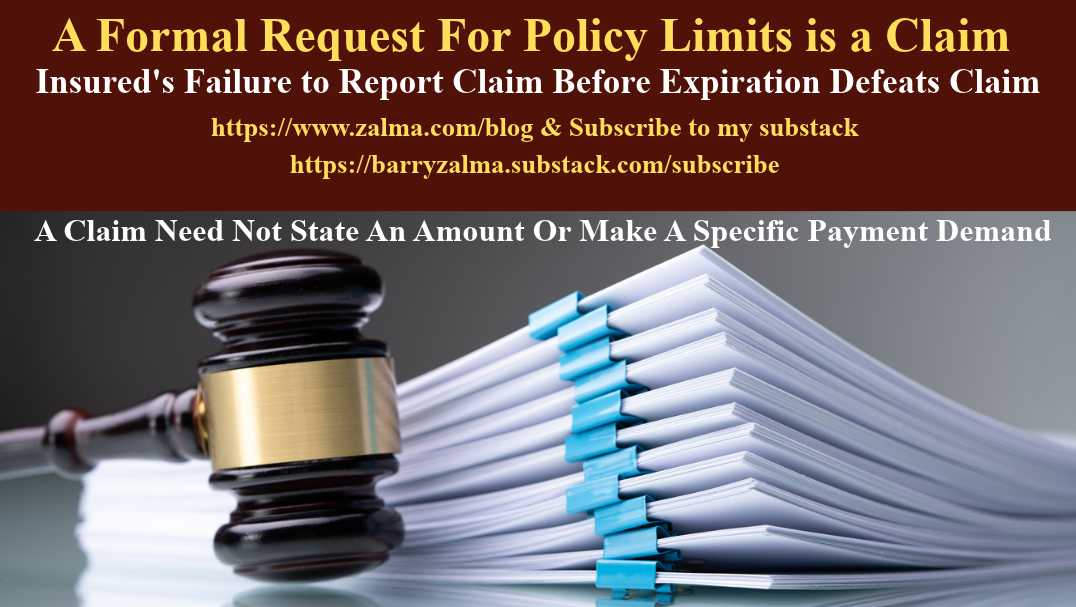
In Diversified Restaurant Group, LLC, et al v. Houston Casualty Company, et al., No. 25-cv-02344-EMC, United States District Court, N.D. California (October 7, 2026) Diversified Restaurant Group and Golden Gate Bell (the “Insureds”) own or operate restaurants, including a Taco Bell in Antioch, California. Houston Casualty Company (HCC) issued them identical “claims made and reported” Employment Practices Liability (EPL) policies for 2022 and 2023. The 2022 policy ran from January 1, 2022 to January 1, 2023.
For the policy to apply, a covered claim had to be made during the policy period and reported to HCC within 30 days after it ended, which here was January 30, 2023. On about December 10, 2022, an underage employee reported alleged sexual misconduct.
On December 14, 2022, the employee’s counsel (Wilshire Law Firm) sent a letter to the Taco Bell. The letter referred to an “accident” on a stated date at a...
Post 4582
Posted on November 17, 2026 by Barry Zalma
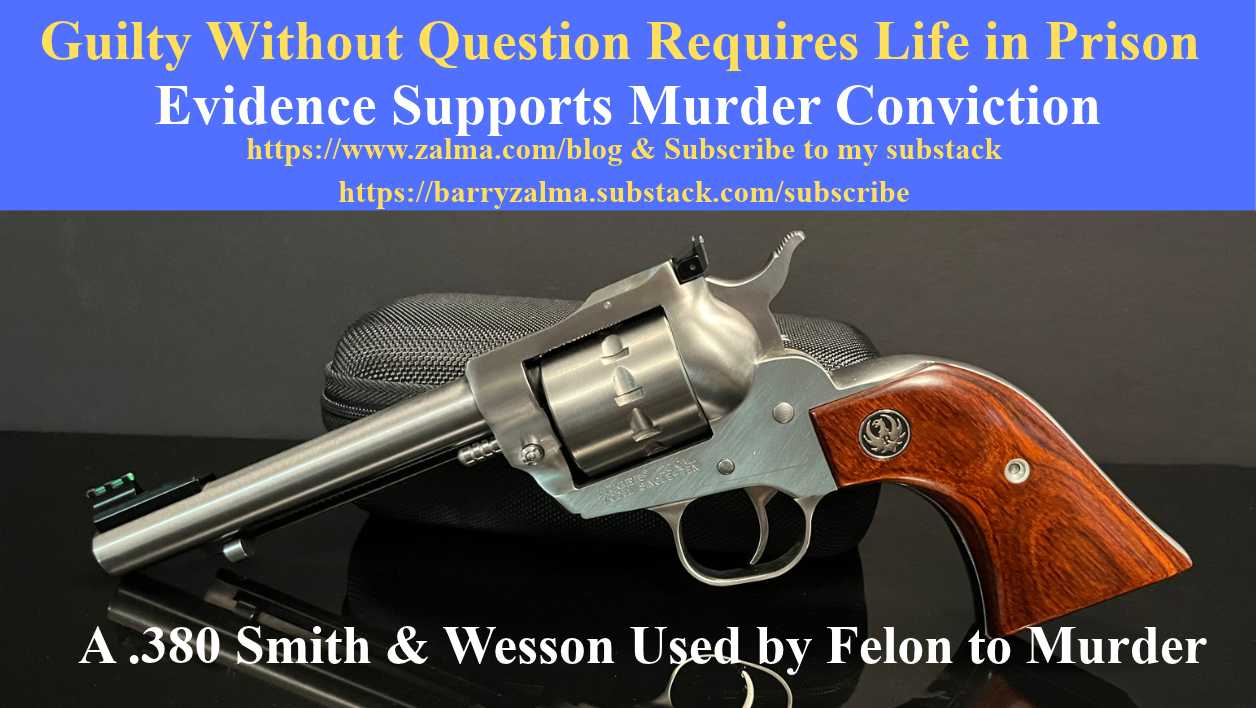
Evidence Supports Murder ConvictionA .380 Smith & Wesson Used by Felon to Murder
In State Of Louisiana v. Curtis Joseph Thomas III, No. 25-KA-612, Court of Appeals of Louisiana, Fifth Circuit (November 4, 2026) the court noted that On Feb. 13, 2022, Thomas called 9-1-1 for an ambulance for a shooting victim at 645 Emile Avenue in Westwego. This was a known “trap house” where drugs were bought, sold and used.
Deputy Vasquez found Thomas walking away from the scene. He searched him and recovered a .380 Smith & Wesson pistol from his pocket. Charles McGehee was killed by two gunshot wounds.
Tyran Simpson was shot in the arm. Simpson identified Thomas as the shooter. The lights and TV went out, and he saw “flames from a gun” from the door where Thomas stood. Simpson admitted he was armed that night and had several prior convictions.
EXPERT TESTIMONY
The firearm examiner matched the casings and both projectiles from McGehee’s body to the pistol found on Thomas.
The DNA expert...